


Key points
Michigan ALS cohort were examined to identify several occupational exposure and their association with ALS risk. Group found exposures considered as "Product Occupations" increase the risk of ALS.
Affiliates
Stephen A. Goutman [1], Jonathan Boss [2], Christopher Godwin [3], Bhramar Mukherjee [2], Eva L. Feldman [1], Stuart A. Batterman {3}
- Department of Neurology, University of Michigan, Ann Arbor, MI, USA.
- Department of Biostatistics, University of Michigan, Ann Arbor, MI, USA.
- Department of Environmental Health Sciences, University of Michigan, Ann Arbor, MI, USA.
Summary
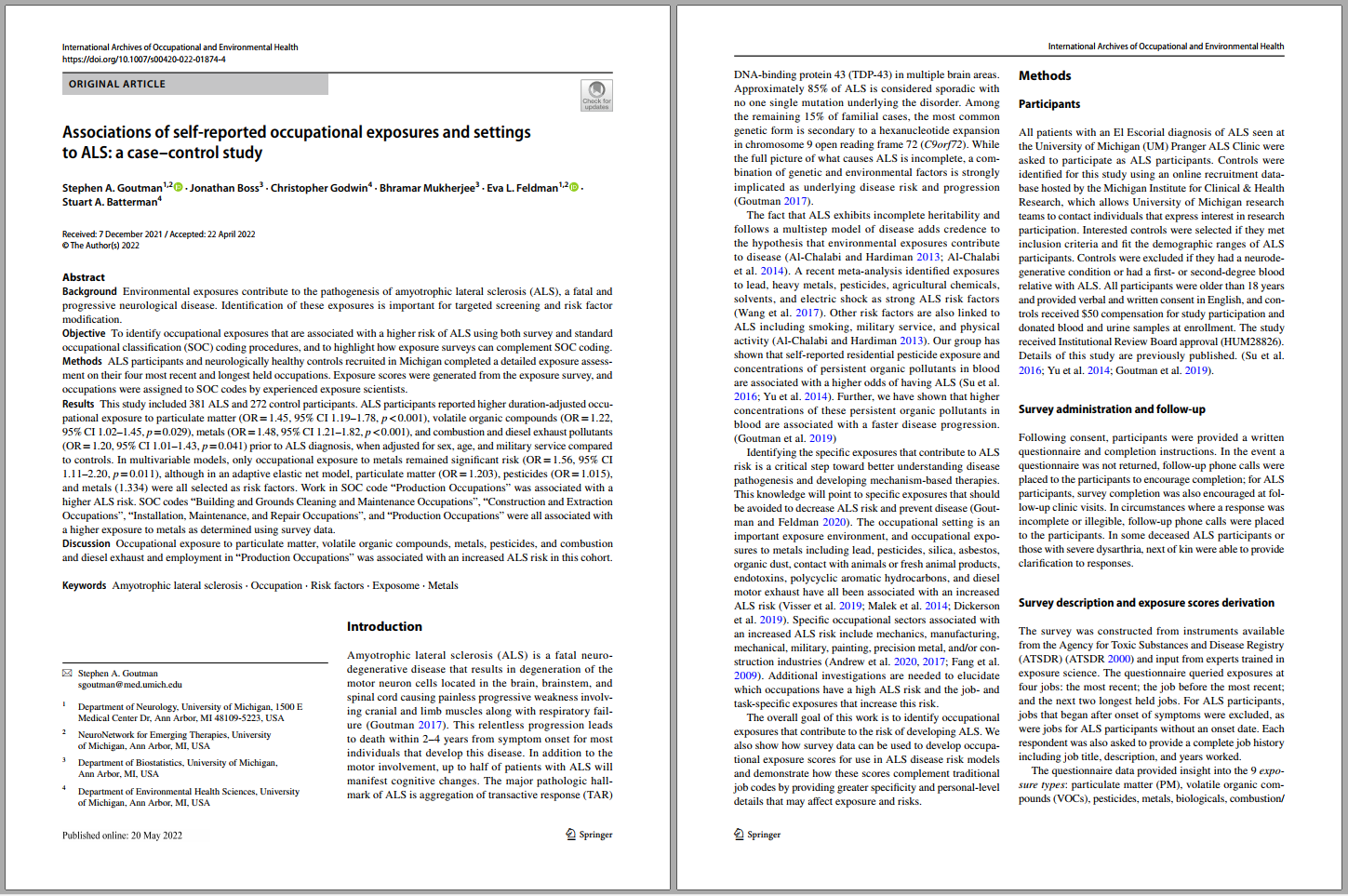
This research article aimed to identify occupational exposures associated with ALS using both survey and standard occupational classification coding procedures. Participants with ALS were recruited in Michigan through the University of Michigan Pranger ALS Clinic. Controls were recruited through the Michigan Institute for Clinical & Health Research. Through data gathered from recruitment surveys, the study found that occupational exposure to particulate matter, volatile organic compounds, metals, pesticides, and combustion and diesel exhaust and employment in “Production Occupations” was associated with an increased ALS risk in this cohort.